Research
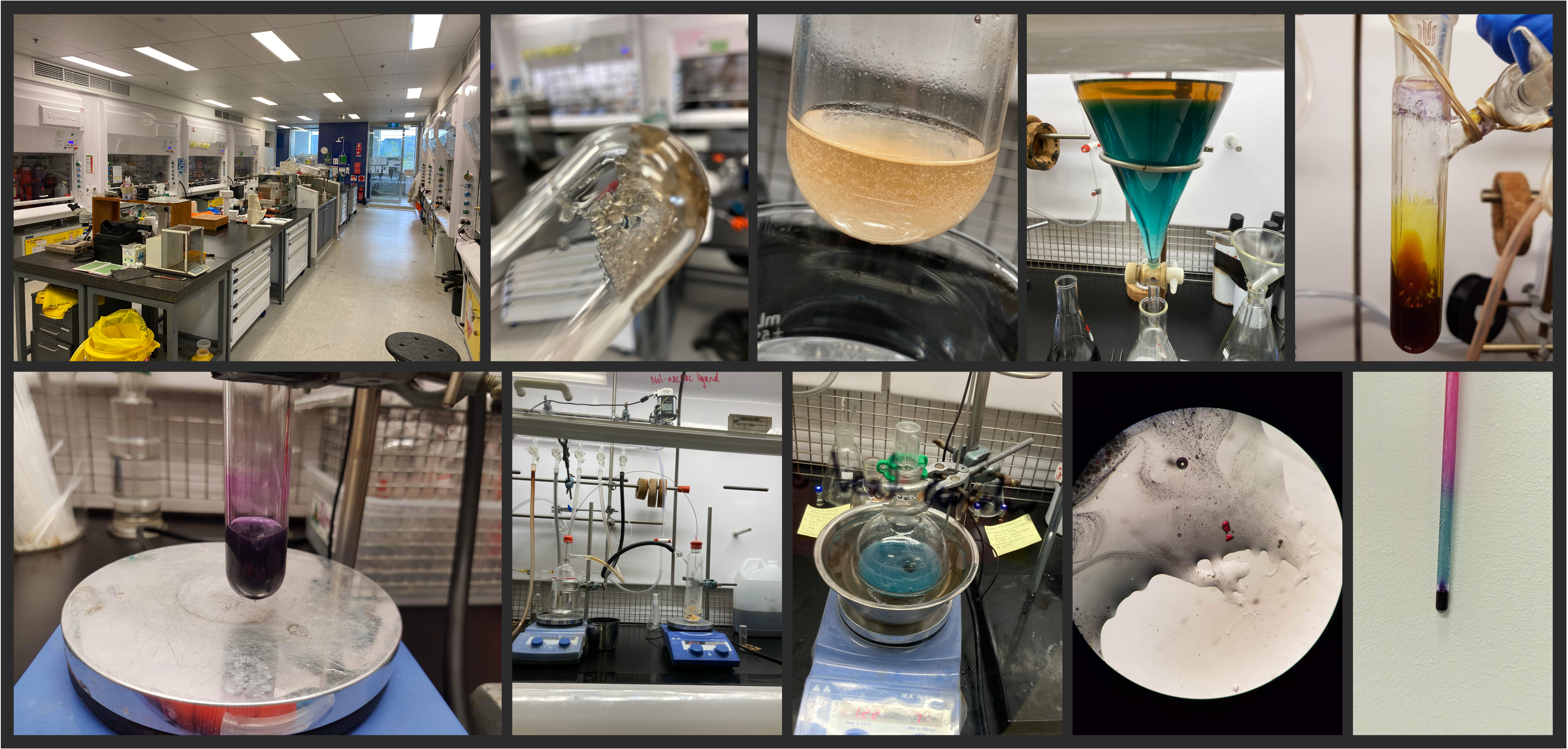
In the Hicks Research Group, we specialise in the synthesis and reactivity of novel organometallic main group compounds for use in chemical synthesis. Some of the projects that we are currently working on are highlighted below.
Anionic Group 2 Hydrides
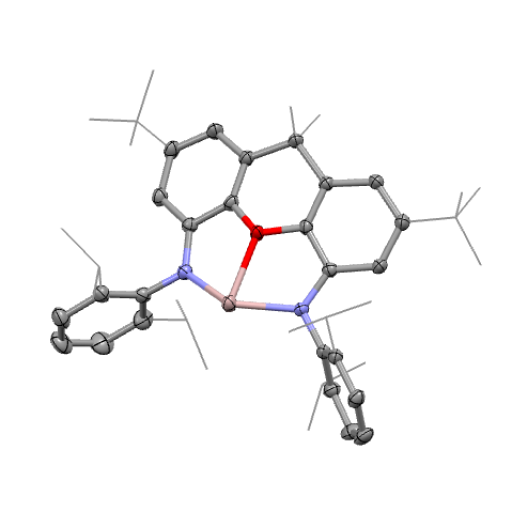
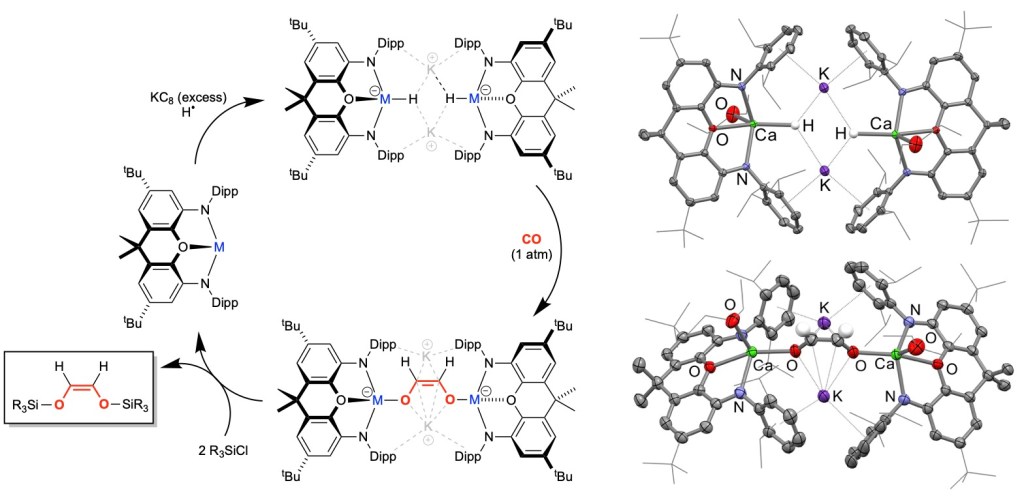
Binary Group 2 hydrides (e.g. MgH2) are ionic salts that are typically insoluble in hydrocarbon solvents. However, in the last couple of decades, chemists have found that using bulky ligands, hydrocarbon soluble molecular Group 2 hydrides can be stabilised. These are mainly neutral species and have shown some fascinating reactivity, including catalysis. In our work, we are interested in anionic Group 2 hydrides, which have been calculated to be more kinetically active than their neutral counterparts.
For an example of work this, see Jacob and Ryan’s publication: https://doi.org/10.1002/anie.202215218
Main Group Radicals
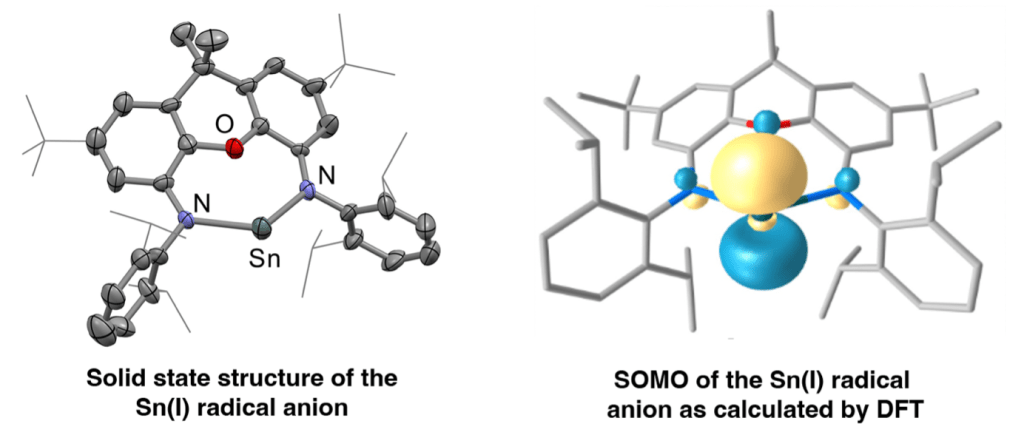
Open-shell, main group radicals are typically highly reactive, transient species that avoid isolation. As such, their structure and reactivity is poorly understood. Using a combination of steric and electronic effects, we have been targeting the isolation of a number of these species to gain a better understanding into their unique electronic structure. Moreover, their potential in chemical synthesis and small molecule activation is starting to be unlocked.
For an example of work this, see Li Feng’s publication: https://doi.org/10.1002/ange.202201248
Aluminyl Anions
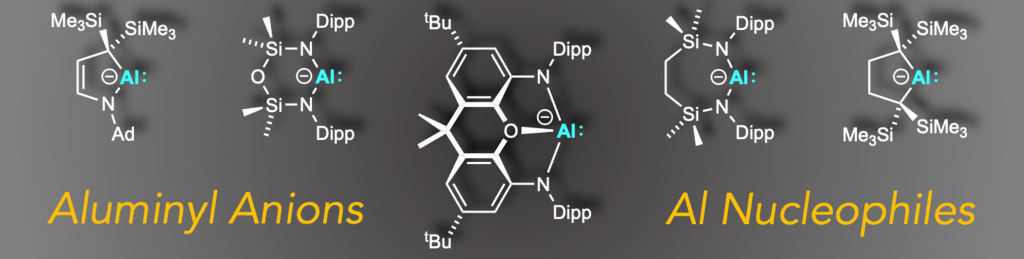
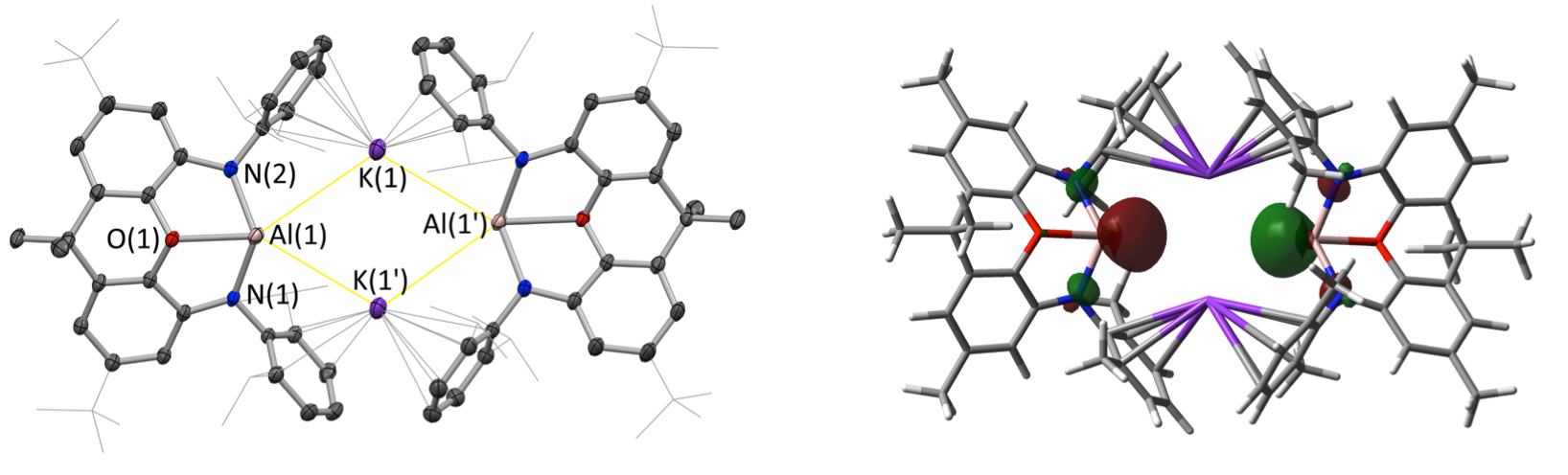
Since their initial discovery in 2018, aluminyl anions have proven to be exceptionally reactive species that serve as nucleophilic sources of aluminium. They have showcased their capability to activate complex substrates as well as challenging chemical bonds. Our current focus lies in modifying the steric and electronic properties of these captivating compounds in order to specifically target the activation of even more demanding substrates.
For an example of work this, see Aidan’s publication in collaboration with the Liptrot Lab (University of Bath) on the first acyclic aluminyl anion: https://doi.org/10.1039/D3CC01317K
 The Hicks Group